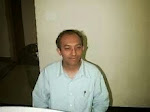
This picture is from about 30 years ago. From 1998-2004, I set up a website, suniljanah.org, on my late father's work as a photographer in India from the 1930's to the 1970's.
বিদায় খালি হাতে এসেছিলাম ল্যাংটো হয়ে। পরেছি কত বেশ। কিছুদিনে বিদায় নেব। জীবন হবে শেষ। দেখেছি কত, শুনেছি কত, ভেবেছি কত কিছু। শিখেছি কত, ভুলেছি কত, খেটেছি কত মিছু। লোকের মধ্যে কত শ্রেণী, কত রকম কাজ। একের ভাগ্য, মেথর হওয়া। আর এক, মহারাজ।
ফুটপাতে, কার ছাতুর বাসন? কার, ওই রুপোর থালি? কার মগজে বিদ্যে এল? কার মাথাটা খালি? কারোর হাতে তাসের অভাব, কেউ তো ছলেই মহান। খাটনিতে যা ফল পাওয়া যায়, পায় কি সবাই সমান? কেউ বা চলে মার্সিডিজে, কেউ বা চড়ে বাসে। কারোর শয্যা রাজ মহলে, কারোর নিদ্রা ঘাসে। তাও তো সবাই দু পায়ে হাঁটে, জীবন মাপে, শ্বাসে। প্রথম কথায়, ‘আম্মা’ বলে, মায়ের গলায় হাসে। আহার, জল তো সবারি লাগে, যতই বিদ্যে পাতে। শেষ বেলাতে, বাঁচবে কি কেউ ডিগ্রী, ধন বা জাতে? কোথায় ধন আর শিক্ষা তখন? কোথায় বিদ্যে বুদ্ধি? সারা জীবন খুঁজেও, শেষে পেলাম না গো শুদ্ধি।
কোনটা সত্যি, কোনটা মিথ্যে, কোনটা ঠিক বা ভুল? এসব ছেড়ে, চলো দেখি— ভোরের ফোটা ফুল।
প্রথম আলোয়, নতুন করে জন্ম নিল দিন। জোয়ার ভাটায়, ভাসিয়ে দিল গত কালের ঋণ। বইল সকাল, গেল দুপুর, দিনের বেলা কাটে। রাতের আসা দেখব চলো, গঙ্গা নদীর ঘাটে।
নিজের ভোরে, এসেছিলাম নগ্ন বেশে, তাই দিনের শেষে, বিদায় নেব খালি হাতে, ভাই।
শনিবার, ২রা আর মঙ্গলবার, ৫ই ফেব্রুয়ারি, ২০১৯ খ্রি ব্রুক্লিন, নিউ ইয়র্ক
The English original is followed by a German translation--basically a machine translation made via http://translate.google.com, with a few changes by hand. -----------------------------------------------------------
Seasons (Fall, 2018)
It's October, and a cloudy day.
The Summer's heat has gone away
And Autumn's flowers now are seen.
They glow beneath a sky of gray.
And soon these blooms will fade and die
And we will look up at the sky
And see the snowflakes drifting down,
As Autumn also bids goodbye.
And Winter too will yield its place,
As this our planet wheels through space,
And then we'll see again the Spring,
Reborn, with a fresh and smiling face.
October. Summer tarried long,
But now is gone. We now belong
To Autumn. Soon the leaves will blow—
As do our lives. I end my song.
2018 October 6th, Saturday Brooklyn, New York
-------------------------------------------------------
Jahreszeiten (Herbst, 2018)
Es ist Oktober und ein bewölkter Tag.
Die Hitze des Sommers ist weg
und die Blumen des Herbstes werden jetzt gesehen.
Sie leuchten unter dem grauen Himmel.
Und bald werden diese Blüten verblassen und sterben,
und wir werden in den Himmel schauen
und die Schneeflocken nach unten treiben sehen,
als auch der Herbst sich verabschiedet.
Und auch der Winter wird seinen Platz zurückgeben,
während unser Planet durch den Raum rollt,
und dann werden wir wieder den Frühling sehen—
wiedergeboren, mit frischem und lächelndem Gesicht.
Oktober. Der Sommer hat lange gedauert,
aber jetzt ist weg. Wir gehören jetzt
zum Herbst. So werden die Blätter wehen—
wie auch unser Leben. Ich beende mein Gedicht.
ছুঁত-অচ্ছুত মানি না, মানি না, ভাই।
ছোঁয়া যেখানে যায়, সেখানে থাকিতে চাই।
মানি না, মানি না, কাফির-মুসলমান।
সবারে সদা করিব সমানে সম্মান।
জানি না উচ্চ-নীচ, মানি না শুদ্ধ-হারাম।
প্রণাম করিয়া, সবারে কহিব সালাম।
অপর-আপন জানি না, মানি না আমি।
যেথায় হিংসা, সেথার সিমাতে থামি।
যে ধর্ম-মজবে সবার কদর, ভালবাসা,
তাহারে মানিব আমি, রাখিব তাহাতে আশা।
The translation below deviates from the literal in some places. ------------------------------------------------
That Creed
Touchable, untouchable, I never will see. Where there is touching, there I would be. Kafir and Muslim, I do not accept. Always, to all, I'll give equal respect.
Higher and lower, allowed and forbidden? To me, these distinctions, forever, are hidden. To king and to vagrant, to uncle and niece— I’ll bow to each humbly and wish them their peace. "My own" and "the other", I know, are the same. In meanness and violence, I see there is shame. The creed in which all have our love and respect— That creed, I'll admire and even accept. 2018 September 21st, Fri. D train from Manhattan to Brooklyn New York
The truth is that every empire, nation, community, family and individual is capable of great cruelty, as also of great kindness. This has been demonstrated over and over again, and we are seeing it being demonstrated now, all over the world. We still need to speak out and act against the cruelty and to recognize and support the kindness.
However, those who see and feel beyond a narrowing of vision and of heart are always vilified. Those who work for the common good and against scapegoating, demonizing and division are inevitably labeled as foreign agents, traitors, etc. Sadly, it is the same in every country, in every age.
Please click on the rounded triangular play-button on
the right to hear a voice recording. In some browsers,
you may have to click a second time. This might not
work on cellphones. Adjust the volume on your device
as needed.
1. the Bengali original (লিখবে শেষে যে), sparked by a Facebook post by Sanju Saha;
2. a Roman transcription (Likhabē Śēṣē Yē), via Google's site, http://translate.google.com, that follows the standard spelling in the Bengali script;
3. another Roman transcription (Likhbe Xexe Je), of the author's devising, that follows the standard Bengali pronunciation, rather than the standard spelling;
4. a voice recording of the Bengali;
5. a translation into English (The Writer at the End).
-------------------------------------------- Item 1: Bengali Original লিখবে শেষে যে অনেক কিছু লেখার ছিল, লেখা হল না৷ ভাবছি, কাকে বলব এখন, বলার ছিল যা৷
ছিলে যখন পাশে, তখন ব্যস্ত ছিলাম, তাই লিখছি এখন, দিনের শেষে, মনের কথা, ভাই৷ আসছে না, সেই বুকের ব্যাথা, কাগজ কলমে৷ বসে আছি, তার-ই আশায়, লিখবে শেষে যে৷ শুক্রবার, ৩রা মার্চ, ২০১৭ খ্রি ব্রুক্লিন, নিউয়র্ক
t and d are dental (with the tongue tip touching the backs of the upper front teeth)—as in Latin languages.
t' and d' are alveolar (tongue tip to upper gum ridge)—as in English.
h is used as an aspirant (an addition of a puff of breath to a consonant, as at times done in English).
All other consonants are roughly as in English, but without aspiration.
All vowels, including those at the ends of words, are pronounced.
All unmarked* vowels are as in Italian and Spanish, but mostly with intermediate length (duration).
~ nasalizes the preceding vowel, faintly.
Stress (loudness) and elongation (extended duration) are usually placed on the first syllable of a word, but are slight, and there is no slurring of vowels in unstressed syllables.
* Marked Vowels
o` is like the first vowel in British orange, being a rounded, open, back vowel, of intermediate length.
e` is as in hat, being an unrounded, open, front vowel, of intermediate length.
Again, both of these vowels have intermediate length (duration). Likhbe Xexe Je
Xukrobar, 3e Marc, 2017 Khri Bruklin, Niu Io`rk https://www.facebook.com/sanju.saha.5/posts/1258502847518557 -------------------------------------------- Item 4: This is a voice recording of the Bengali. This might not work on cellphones. Please click on the rounded-triangle play button on the right of the composite icon below. In some browsers, you might have to click twice. Adjust the volume on your device as needed.
Below the image, there is a the link to a story in the Telegraph (India). This is followed by a free translation of the verse into English. Then there is the Bengali original, in three forms:
a phonetic Romanization that follows standard Bengali pronunciation;
the Bengali script;
a Roman transcription that follows standard Bengali spelling.
When the rains come again, oh then I will ride
Upon the great wheel, with my girl at my side.
We will soar up on high, ho ho! We will see
the city below us. In the clouds, we will be.
Then—lightning! Below, they will see the great flash,
and when we return, they will find that we’re ash.
2016 November 1st, Tue. Brooklyn, New York
----------------------------------------------------------
The pods of the tamarind fruit are hanging from the tree. Do you remember the taste of the tamarind chutney? Grandmother made it. It tasted sour and sweet. She’s long gone. No more of that for us.
2016 November 1st, Mon. Brooklyn, New York
---------------------------------------------------
Note: The English translation of the Bengali verses is at the bottom of the post, followed by a link to a brief, disturbing video from an Assamese site.
Note added 9/24/16: An audio recording of the Bengali has been added, just above the preface to that translation.
------------------------------------------------
I found this "advertisement" in a Facebook post.
On seeing this, I penned some lines in Bengali in response, which you will find, lettered in a large font in the traditional script, right below this preface.
Below that is Google's machine-transcription, which follows the spelling used in the Bengali script. I have added capitalization at the starts of sentences and proper names. \1
After that, there is another Roman transcription. This follows the standard Bengali pronunciation, rather than the traditional spelling (which is no longer phonetic). \2
Finally, at the bottom of this post, there is a fairly literal translation into English, titled The Taste of Cow.
Note added 9/24/16: An audio recording of the Bengali has been added, just below the second transcription (and so just above the preface to the English translation).
— Arjun
------------------------------------------------ Notes: 1. The service used for the first transcription (which follows the traditional spelling) is available at http://google.com/translate. That machine-transcription appears below the data-entry panel on the left at that site, whereas the machine-translation—which leaves much to be desired—appears in the panel on the right. 2. A brief summary of the phonetic, pronunciation-based scheme used for the second transcription can be found in the preface to the blog post Bharot Xadhin (India, Free).
------------------------------------------------
গাভীর স্বাদ চেখে দেখ্ তো এটা, কাঙ্গাল, ছোটো জাতের পো! কি জাতের মাংস এতে? আছে কি এতে গো? গরুর চিহ্ন পাস যদি, ডাকব পুলিশ-গুণ্ডা৷ সাজা-শাস্তি পাবে খ্রিষ্টান, মুসলমান, ডোম, মুণ্ডা! গাভীর স্বাদ তো জানি না গো, তাই তো তোর এই কাজ৷ বখশিশ পাবি, শালা, যদি ধরাস কাকেও আজ৷ শনিবার, ১০ই সেপ্টেম্বর, ২০১৬ খ্রি ব্রুক্লিন, নিউয়র্ক
------------------------------------------------
Gābhīra Sbāda
Cēkhē dēkh tō ēṭā, kāṅgāla,
chōṭō jātēra pō!
Ki jātēra mānsa ētē?
Āchē ki ētē gō?
Audio: Click on the arrow on the right in the green area below to hear an audio recording.
Vocaroo audio and voice recording service>>
In Google's Chrome browser, you might have to click on the right arrow again. Please also adjust your speaker volume.
---------------------------------------------
Unfortunately, the rhythm, the rhyme, the cultural context and other nuances in the Bengali original above could not be properly conveyed in the English translation below.
The Taste of Cow
Taste this, you pauper,
you low-breed’s spawn!
What meat is in this?
Does it have beef?
If you find a trace of beef,
we’ll call the goons—the cops.
They’ll get their dues—those Muslims,
Christians, Mundas, Doms!
We do not know the taste of cow;
that’s why you’ve got this job.
You’ll get your tips, you bastard, if
you help us catch some scum.
Saturday, 10th September, 2016 Brooklyn, New York
----------------------------------------------
Meanwhile, one can observe supply, demand and devilish primate ingenuity at work:https://www.facebook.com/AxomLive/videos/1260643544024253/ I am not sure of the where, when and why of the events shown in this brief video clip, although I could guess at each. The whispered snatches of conversation, where I could follow them, appeared to be either in a dialect of Bangla (Bengali) or in a neighboring sister language.
Fortunately, the involuntary migrants appeared to be none the worse—at least for the moment—for their brief, but excruciating, crossing.
Note: The phonetic transcription and the translation to English have not yet been done.
-------------------------------------
চীন দেশে ভ্রমণ
অনেক বছর বাদে, চললাম ছুটির দিনে, হাওয়ার জাহাজে চড়ে, এই পৃথিবী ঘুরে, অন্য এক দেশে৷
তাজ্জব হয়ে, দেখলাম সেখানে চলছে মানুষ বেগে— কেউ বা হেঁটে, কেউ বা সাইকেল-স্কুটারে, কেউ বা গাড়ীর ভেতরে৷ জানিনা সে দেশের ভাষা, জানিনা সে দেশের লেখা৷ শুনলাম অনেক কিছু, বুঝলাম লবডঙ্কা, কয়েক ছুটির দিনে, প্রাচীন-আধুনিক চীনে৷
বেইজিং শহরে আজ নেই আর মহারাজ, নেই আর সুন য়াত সেন, নেই আর কুয়োমিনতাং, নেই আর মাও জেদং৷
গেছে একে একে সবাই৷ রয়েছে পুরোনো প্রাসাদ৷ রয়েছে মূর্তি, ছবি৷ রয়েছে কি আর কবি? এসেছিল লাল প্রভাত৷ এসেছিল কৃষকের আশা৷ এসেছিল মজদুরের দিন৷ এল তার সন্ধ্যে, ভাই৷ খুঁজেও পাবে না তাই৷
So far, this post includes the original, in Bengali script, an English translation, an attempt at translation into Hindi--and a machine-translation of that attempt into Urdu. The three translations are at the bottom of the post.
I have also included three images, a link to an earlier poem and links to information and videos about Bauls, including two recordings (with English subtitles) by Parvathy Baul.
The periods (full-stops) and some of the commas in the Urdu version are misplaced, owing to text-flow-direction difficulties. (Urdu uses a modified Arabic script, written from right to left.)
Any feedback, comments and corrections--especially to the Bengali, Hindi and Urdu--would be most welcome.
In the first line of the second stanza, I have changed the tense, in the Bengali and English versions, to the present, altering the English line from
"I never worked at jobs or farms."
to
"I do not work at jobs or farms."
Bauls appear to live mainly by singing and, as many Hindu, Buddhist and Jain monks do, by begging. However, it seems likely that they will have also, at times in their lives, worked in other ways--for a living or to help their families of birth.
Nevertheless, I have left that line in a sort of past perfect tense ("I have not worked at...") in the Hindi and Urdu versions.
To see the images in a somewhat larger and clearer view, click on any one image. Then use the arrow keys on your keyboard or click on the thumbnails. To return to this blog post, click on the white X near the top right of the black background.
------------------------------------------------------------ বাউল জীবন
The following are two video recordings of Baul songs, sung by Parvathy Baul (Mousumi Parial).The songs have English subtitles.
In the first song, note the blurring of the distinction between forbidden, amorous love and love for the divine, found in certain bhakti (devotional) songs of Vaishnavite Hinduism and also in other traditions, such as those of the Sufi poets of Islam and certain aspects of Christianity.
This is expressed, in this song, as the pining of Radha for dark-skinned lover, Krishna, at night and even as she goes about her daytime domestic duties. She is advised to be secretive and clever in her trysts (perhaps only imaginary) with her lover.
The song talks about the wood-smoke bringing tears to the eyes of Radha as she tends the household cooking fire, and about her bathing and swimming in the pond or river. These were things typical of rural India.
The second song is followed by the singer's explanation, in English, of that song's content and emotional context.
The recording is in rather childish Bengali. The "free translation" is still fairly literal.
A word-for-word literal translation, following Bengali syntax, is also provided there, in the lower part of the tables. That is meant for language learners and for those interested in the differences in syntax between languages.
Note: The recording at the link above might not work on some mobile phone applications and on some networks. Also, the columns in the tables are best seen together. This needs a wide-screen view. Rotating a "smartphone" to get a wider view might perhaps provide such a view. But the text characters might still be too small to read, without zooming.
The Bengali text is here in this blog post, directly below the image. There are more images (of sunsets at or near Kolkata) at the bottom of this post, along with viewing instructions.
---------------------------------------------------------------- সন্ধ্যে এল সারা দিন গেল, কাজ হল না, সন্ধ্যে এল শেষে৷ পড়ল মনে, ছোটবেলার সন্ধ্যে, বাংলাদেশে৷
"বাংলাদেশ" ত নাম ছিল না রাষ্ট্রের, যেমন এখন৷ মেদিনীপুর আর মালদা ছিল বাংলাদেশে তখন৷ কোলকাতায়, ভোরবেলাতে, সূর্য ওঠা দেখে, জাগত প্রাণে সুখের গীতি, ভোরের হাওয়া চেখে৷ সন্ধ্যেবেলায়, সূর্য যখন ডুবছে, কোমল সুরে, দুখের বিলাপ, কোথার থেকে আসত তখন ঘুরে৷ দেশ ছাড়লাম, পড়াশোনা থামল অবশেষে৷ কাজের দিনো চুকল এবার, এই যে দূরের দেশে৷ খাটনিতে ত ব্যস্ত ছিলাম, দুপুর, বিকেল বেলায়৷ সন্ধ্যে এল, পড়লাম এবার বেকার-বৃদ্ধ ঠেলায়৷ বুঝবে কি গো, মগজ আমার, কোথার থেকে, ওই সন্ধ্যেবেলার দুখের গীতি, যতই পড় বই? শোনো এবার৷ বলছি আমি, সন্ধ্যেবেলার গান, ভোরের ভজন, জীবন স্রোতে, জোয়ারভাটার টান৷
অতীত থেকে আসছে ভেসে, যাচ্ছে আবার দূরে৷ ভবিষ্যতের খবর নিয়ে, আসছে আবার ঘুরে৷ দিন ফুরল, কাজ হল না৷ সন্ধ্যে এল শেষে৷ পড়ল মনে, লাল আকাশের কাব্য, বাংলাদেশে৷ শনিবার, ১৮ই জুন, ২০১৬ খ্রি ব্রুক্লিন, নিউয়র্ক
To see the four images (in this Daily Poet blog post above) in a larger size and clearer form, click on any one image. Then either use the arrow keys on your keyboard to view each image in turn, or else click on the thumbnail images at the bottom of the screen. Click on the white X near the top right of the black background in that "gallery view" to return to this blog post.
----------------------------------------------------------------
The poem, in Bengali script, is followed by a recording, then by two Roman transcriptions, and finally by a free translation into English.
Note: Translations into Hindi-Urdu (the Urdu being from the Hindi via http://google.com/translate ) have been added at the end of this post.
In the Hindi translation (written in Devanagari script), the words used are, with some exceptions, mainly those of the lingua franca spoken in many of the cities and villages of the northern and central subcontinent, rather than those of the more formal, Sanskritized Hindi.
This popular form of Hindi-Urdu, used by Hindus, Muslims and others, had fewer borrowings from Arabic and Farsi than literary Urdu. Some used to call it "Hindustani", before the Partition of 1947. It is still very much in use, in both India and Pakistan, and is widely understood in both countries.
Comments, criticism and corrections are very much needed. These can be made through the small "Post a comment." link near the bottom of this post (above the "Links to this post" heading), or via e-mail to sjanah@aol.com.
----------------------------------
This might not be available on mobile phones and some networks.
To hear the audio recording in Google's Chrome browser:
1) first, click the triangular play button on the right, above;
2) then click either:
a) that button again to play the audio in the background (on this page);
or
b) the rectangular button on the left, above, for audio at the Vocaroo site.
The procedure in other browsers might be slightly different.
Vocaroo: Record and upload audio >>
----------------------------------
A breeze is blowing from the river.
I sit on the banks and think,
“When will I get a job?”
The river is slowing,
but expenses are not.
I fill out applications,
but I get no replies.
2016, June 15th, Wed. Brooklyn, New York
---------------------------------- गंगा के किनारे गंगा नदी के किनारों पर, हवा बह रही है अब। मैं बैठा रहा हूँ, इस उम्मीद मे -- एक नौकरी मिलेगी कब? नदी की ताकत कमती रहती है, लेकिन खर्चे बढ़ रहा है। हर रोज, आवेदन भेजता रहता हूँ। लेकिन जवाब मिलता नहीं है। बुधवार, १५ जून, २०१६ ईस्वी ब्रुकलीन, न्यूयॉर्क
----------------------------------
گنگا کے کنارے
،گنگا دریا کے کناروں پر
.ہوا بہہ رہی ہے اب
-میں بیٹھا رہا ہو، اس امید میں
ایک نوکری ملے گی کب؟
،دریا کی طاقت كمتي رہتی ہے
.یکن خرچ بڑھ رہا ہے
.ہر روز، درخواست بھیجتا رہتا ہوں
.لیکن جواب حاصل نہیں ہے
بدھ، ۱۵ جون، ۲۰۱۶ ء
بروک لین، نیویارک
----------------------------------
Comments, criticism and corrections are very much needed. These can be made through the small "Post a comment." link near the bottom of this post (above the "Links to this post" heading) or via e-mail to sjanah@aol.com.