Showing posts with label Dehumanization. Show all posts

Thursday, February 27, 2025

To See Ourselves in Others

 
To See Ourselves in Others
 
We humans have abilities, remarkable indeed,
And some are quite admirable—of thinking, word, and deed—
And others, though amajing, may leave us quite perplexed
And even, when encountered first, so maddeningly vexed
That only introspection might, in course of time, allow
An insight into origins—including why and how
Behaviors, strange, and attitudes emerged and then prevailed
That still persist, in most of us, that might appear derailed—
Divorced from justice, empathy—and even reason, sense—
Controlling much of how we feel and think and act. The whence 
And wherefore of this human world cannot, indeed, be known
Until we see and understand the things that we disown
In selves and those we see as ours, ascribing these to others
We see as simply alien, although they’re born of mothers
And like us, have emotions, thoughts, experience pain and pleasure,
And yet are seen as different, by every human measure.
 
To see ourselves in others, and others in ourselves
Is often sadly lacking, amidst our clans of elves
With all our seeming magic and all our scheming ways, 
And all our sights and blindnesses that guide us through our days.
 
2025 February 27, Thu.
Berkeley, California 
 

Monday, July 15, 2024

Peace and War


Peace and War
.
The silence and the summer sun
On California’s coast,
The rustling of the leaves of trees,
The distant, passing train,
.
The letting go of everything 
Of which I once could boast,
The touching by the cooling breeze,
The easing of the strain,
.
The blue of sky, the green of leaves,
The warmth of sun on skin,
The calling of the bird I hear, 
The sway of grasses tall—
.
These all combine and so provide,
Within this world of sin,
A music of the eye and ear
That brings relief to all.
.
******
.
And yet, the all-devouring greed
Will rarely pause to taste
Of all of this that beings need,
While laying more to waste. 
.
So wealth will flow, accumulate,
And bombs will fall and burst,
As burnings rise, along with hate,
And children die of thirst.
.
****** 
.
I call to those who've closed their blinds
To open windows wide
And look, with open minds and hearts,
Across the harsh divide—
.
To see that children, everywhere,
And women, are the same—
That sentients feel of grief and pain,
As humans should of shame.
.
2024 July 15th, Mon.
Berkeley, California
.

Tuesday, February 19, 2019

Reasons Why


In several ways, this must be one of the worst (or at least strangest) poems I have ever written.  But please read it to the end, if you are able.
.
The format may be distracting, but the content is even more disturbing.  That disturbance may be needed, however, to see our way out from a trap of our own making. 
------------------------------------------------
.
.
Reasons Why 
.
In places far, the soldiers die,
And what can kinsfolk do but cry?
When more are sent to kill and die,
Who dares to ask for reasons why?
.
The soldiers are trained to just comply
And not to ask for reasons why.
And so we send them out to die—
Too often, to support a lie.
.
So Nation A and Nation B
Send humans out, like you and me,
Who could be friends—except, you see,
They think they’re serving A and B.
.
But is that sacrifice deserved
By those, whose wealth is well-preserved--
The ones, by ardent soldiers served
Or those, for "martyrdom", reserved?
.
******
.
They meet, those dons from A and B—
The ones who rule both you and me
And soldiers too. But can’t you see?
They’re using those like you and me.
.
They sit and chat and laugh and drink,
As humans should. And then they wink
And make their deals that link, unlink
The fates of those who’ve ceased to think.
.
In every nation, it’s the same.
Another nation gets the blame—
Along with those, who’re set to shame
And silenced—those against this game.
.
And so we are distracted and
We fail to see and understand.
The years go by like flowing sand
And soldiers still are in demand.
.
******
.
If only those, who don their suits
And walk on marbled floors, wore boots
And then were sent in those pursuits
That soldiers are—we’d see the fruits!
.
Then wars might cease—and peace prevail.
We might be rid of this travail.
But still—we do not see, and hail
The one that hammers in the nail.
.
And so we each are crucified—
And soldiers most, who’re deified,
But only when they’ve glorified
This game. We should be mortified.
.
A soldier dies a “glorious death”
And so the need for more is met,
As others join the ranks and get
Their meager pay—and pain and death.
.
******
.
Without the film-crew, where’s the star?
Without the worker, where’s the car?.
Without the soldier, where’s the war?
Till robots rise, that’s where we are.
.
When soldiers die, we do not care—
Except when lights and sirens blare.
And then it’s far too much to bear.
We seek revenge as our rightful fare.
.
A soldier is portrayed as brave.
In truth, he’s molded to a slave—
Too often, bowing to a knave.
Obedience is what rulers crave.
.
The one religious wakes and prays.
The one who isn’t marks his days.
But neither stops to see the grays.
The order comes—and he obeys.
.
******
.
But who’s he shooting, beating? Ask!
And should he question then the task?
“It doesn’t matter! Don the mask
And like a robot do the task!”
.
And so we all are robotized.
This quality is highly prized.
We might, as humans, be disguised.
Our freedom, though, has been excised.
.
What freedom is left for an employee?
A slave to a wage, she will always be.
And that's how it is for you and me
In the land of the brave and the home of the free.
.
And that's how it is, in every land—
In nations small and in nations grand.
It's been this way since we've tilled the land—
As our lords and masters understand.
.
******
.
Our work is measured by their gauges.
So soldiers earn, with gore, their wages.
Mammon’s clerks have scribed the pages.
The cage is sealed. The battle rages.
.
So dogs and roosters fight and shred
Opponents. Floors are smeared with red.
With blood, the blood-lust must be fed.
The cheers resound, when one lies dead.
.
We count our wins and bear our losses.
We carry, each of us, our crosses.
We catch the ball the captain tosses
And run with it. We bow to bosses.
.
So soldiers too must daily do.
They’re humans, just like me and you.
They're trained to pull that chariot too—
That juggernaut of this circus-zoo.
.
******
.
So many soldiers take their lives
And leave behind their parents, wives
And children too. Our love revives
When bombs explode and none survives.
.
They died together, blasted, burned.
The wages that their service earned
Have ceased. Will widows’ pleas be spurned
For pensions—or for lessons learned?
.
The funds and arms for death were sent
By those, on wreaking mayhem, bent.
A superpower long had lent
What’s needed, taking lives as rent.
.
But why? Go ask of Mammon and
Of Satan. They’ve had motives grand
And petty. But the fronts are manned
By those who must not understand.
.
******
.
A nearby nation once had burned
And tactics practiced there were turned
To uses here, by those who’d learned
To murder, maim—for credits earned.
.
Such schools exist, for ardent sons,
Who there are trained, perhaps with guns—
Or else without—for they’re the ones
Whose bodies burst like searing suns.
.
They don’t have planes and missiles, so
They use their feet, however slow,
And going where they’re told to go,
They then deliver there the blow.
.
So soldiers once again will die
And others too. The limbs will fly.
The bodies, torn and charred, will lie.
And who will ask for reasons why?
.
******
.
So thousand-pounders do as well.
They turn a town into a hell.
But who is there to see and tell?
Those stories aren’t fit to sell.
.
When suicide bombers kill a score,
It’s a heinous crime like none before.
When missiles daily kill far more,
That’s war—and who is keeping score?
.
The bombers circle once again
And drop their bombs like falling rain.
And beings burn and cry in pain,
But Terror doesn’t fly a plane—
.
Except that once—that we remember—
On an autumn morning in September,
When our homeland too received an ember
Of the fires we’ve set—that some remember.
.
******
.
And soldiers shoot civilians too,
Who aren’t armed—and I and you
May hear at times of one or two,
As armies do what armies do.
.
A thousand pellets, flying fast!
The boy had ducked. They speeded past.
The girl could not.  She sees her last.
And so the daily die is cast.
.
So many children, walking blind!
The captain says we should not mind.
A better means is hard to find.
Our use of pellets shows we’re kind.
.
And still, we see the flying stone
That flung with force can break the bone.
That’s all he has. For that alone,
The thrower may, for long, atone.
.
******
.
These bullets now—as you can tell--
Are ones the pelters know too well.
They pulverize the bones. They sell
Because they make, of life, a hell.
.
But this again is seen as kind
Or justified. We should not mind.
In every nation, some will find
That “kindness” has been redefined.
.
Seventy thousand listed dead.
A street that’s often bathed in red.
The youths are now, by zealots, led.
The ones, who reasoned, long are dead.
.
That demon that is Blind Religion
That plague that’s ravaged every region—
Has mounted now on that of Nation 
And whips us on towards damnation.
.
******
.
But Faith and Nation need their stash,
So see—how deep they bow to Cash! .
And lo—it turns this world to trash,
And all that’s precious, serves to smash.
.
And so the spiral turns and turns.
The children cry. The village burns.
The vultures wait. And what returns
Is ash, perhaps, in plastic urns.
.
A thousand miles. The widow weeps.
A little bit of ash, she keeps.
But where he served, another leaps.
The Reaper, yet another reaps.
.
How many humans more will die?
How many orphans more will cry?
How many bullets more will fly?
And who will pause to question why?
.
******
.
A story has its bends and twists.
Their weapons could be arms and fists,
But all we’ll ever see are lists
In which the slain are terrorists.
.
That woman and that child as well?
Those aren’t things on which we dwell.
There’s no one with a voice to tell
“They’ve turned our home into a hell.”
.
But where is “home” and who are “they”?
That home’s unseen and far away.
Who orders this? I cannot say.
But soldiers listen and obey.
.
It could be at a barbed-wire border.
It could be for the sake of order.
It could be by the forest’s border.
But soldiers must obey the order.
.
******
.
A girl is slain. Her parents sigh.
But should her siblings only cry?
So tens of thousands more will die.
And who will ask for reasons why?
.
2019 February 19th, Tue.
Brooklyn, New York
.  

Sunday, September 23, 2018

Windows


Windows

We were scattered over continents—
With oceans in between.
And those with whom we'd bonded were,
For long, unheard, unseen.

But now there is the Internet
And mobile phones and more,
And so we're back in contact with
The ones we'd lost before.

But some are gone, and newer ones—
The ones we'd never known—
Now show themselves—in image, text—
On screens we each might own.

******

We did have phones for quite a while,
At least in urban places.
But calls were few and far between,
Across the global spaces.

But speech can now be cheaply heard,
And the voices from the past—
That still survive—have a cadence slow,
In a world that changes fast.

We marvel at these miracles
That seem like science-fictions
And wonder at the spouses, kids
And the old, familiar dictions.

The ones who once were youngsters now
Have grandkids and have wrinkles.
We see on screens these wonders and
We feel we’re Rip Van Winkles.

******

And yet, although we now can peer
Through windows, space divides us.
So most of us can still not reach
And touch the ones not near us.

So when a father has a stroke
Or when a mother cries,
We dare not ask for leaves from jobs,
Unless we trade in lies.

And when a parent perishes
And the other takes to bed,
We're lucky to get half a week
To seem to serve the dead.

******

Some travel every month across
The continents and oceans
On business trips—and also fly
To faraway vacations.

And some enjoy this flying high
But others quickly tire
And wish there was a quiet place
To which they could retire

For leaving those we love behind
To deal with their travails
Is hardly good for peace of mind—
Or fit when someone ails.

Yet others save for many years
For a trip across the borders,
And most of us will rarely go
Beyond a boss’s orders.

******

We fly across the world or cross
A desert in the darkness,
But spend what then is left of life
In a job that acts as harness.

We travel to and from our work
In a captive state of mind
And use our phones as windows to
The worlds we’ve left behind.

And some can buy a ticket and
Then fly across the sky—
But most are bound to where they are,
Until they too can die.

2018, September 22nd, Sun.
(verses added Sep. 25th, Tue.)

Brooklyn, New York
   

Thursday, July 30, 2015

Nations Proud and Pure

 
Nations Proud and Pure (Draft)
  
Children cheering Axis leaders, Japanese poster, 1938
source: ?

“The strong should rule the weak,” she said,
“And those of sharper mind
Should govern those who're duller, so
We won't be left behind.
 
“But first, we have to purify
And cleanse our land, our race!
The parasites that we have borne
Are filth we must erase.”
      
“We need a state,” the prophet said,
“For every tribe and sect,
So each of these will then be pure
And cleansed of past defect.”

“The choicest lands should be reserved
For those of the highest races,
While all the vilest vermin are
Assigned to the blasted places.

"And if there is contention, let
The battles then begin,
Which those, who are the strongest and
The shrewdest, swiftly win.
 
“In countries blest there might of course
Be space for servants humble
Of lower races for the work
At which the high might grumble.

“So if by chance a nation lets
Another people stay,
It should be clear who rules the land
And who should just obey.


Benito Mussolini and Adolf Hitler, 1930's-1940's
source: ?

“For the highest nations know they are,
In all the world, the best.
And if this is acknowledged, they
May tolerate the rest.

“Miscegenation is the root
Of every region’s woes.
Preserve your culture and your race
By shutting close your doors!

“Your strength is your security!
So use both arms and lies
To silence and to swindle those
Who matter less than flies.

“So set, upon a throne on high,
For worship, self divine.
And right below reserve a place
For those you call as ‘mine’.

“It isn’t just your family.
It’s more your culture, race
That should, by rights, be seated at
That special second place.

“Let ethics be a thing reserved
For those within your sphere.
For plants and beasts and races vile,
You shouldn’t waste a tear."


Spain's Francisco Franco
source: ?

And saying this she looked around
At all who’d raptly listened.
And she could see that every eye,
With zealous fervor, glistened.

“We need a state,” the prophet cried,
“For every human tribe!”
As everyone arose and cheered
Her rousing diatribe.

“But even in one race there are
The weaker and the stronger.
It's fit the strong should rule the weak,
For states would then last longer!”

In every head there danced, that day,
A vision: there’s a cure,
For all the ills of humankind,
In nations proud—and pure!

And each of them, returning home,
To kinsfolk near and dear,
Revealed that dream—that promise of
A future cleared of fear.

No more of persecutions or
Of slights or tolerating
The boorish ways of simians or
Yet more illicit mating!

And each of them was filled with joy
In fond anticipation
Of a nation pure, with limpets cleared
Or sent to their damnation.


Argentina's Jorge Rafael Videla
source: ?


Chile's Augusto Pinochet
source: ?

2015 July 30th Thu., 4:30 pm
Skyway dhaba, Bath Avenue
(1st, 2nd & 5th-from-last stanzas added

Aug 8th, Sat., along with the images)
Bensonhurst, Brooklyn, New York
-------------------------------------------------

Note:  The opinions expressed in this piece are not those of the writer. 
 

Tuesday, April 7, 2015

Garissa

 
Garissa
 
University students slaughtered by Al Shabaab gunmen 
Garissa, Kenya, 2015 April 2nd
Source: unknown


The blood has darkened on his skin,
it’s darkened on his shirt.
And see – the blood he vomited
has darkened in the dirt.
 
And there he lies, among the rest
they murdered yesterday,
the ones who used their guns, as shrieks
arose and died away.
 
It’s silent now, where once there was
the noise of students’ chatter.
And all the questions that they had,
it seems, no longer matter.
 
For here, within the college grounds,
the slaughtered students lie.
And all that those, who knew them, now
can ask is, “Why, oh why?”
 
2015  April 7th, Tue
Brooklyn, New York
   
http://en.wikipedia.org/wiki/Garissa_University_College_attack
   

Saturday, March 14, 2015

Music?

 
Music?
 
   
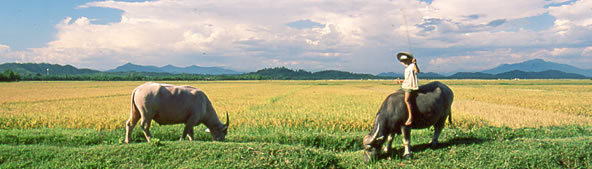
A pastoral scene, somewhere in Indochina
http://www.lotustours.net/images/backgrounds/2-column/vietnam/2.jpg


Women on a country boat, Vietnam
http://www.onthegotours.com/blog/wp-content/uploads/2011/10/BoatWomen-of-Vietnam-dreamstime.jpg


The songs I heard when growing up were songs
that still remembered village, forest, field.
Their cadences were softer and they still
retained the sounds of water and of wind,
the calls of beasts, of insects and of birds,
of humans hailing over distances,
of lullabies, of whisperings of love,
of village dances, dirges, plaintive chants
addressed to spirits and to feeling hearts...
   
******
 
But now I hear the songs of industry,
the sounds of pistons and of furnaces,
the screams of engines and of humans mixed –
as both are pushed to limits – sounds of stress,
of pain, of malice and of agony –
that mimic too the sounds of modern wars –
of screaming jets, of helicopters, guns –
the thunder of the cannons, missiles, bombs –
not music this – but hell’s infernal roar.


Bombing and defoliation, Vietnam War, 1960's-1970's
http://www.trueachievements.com/customimages/021715.jpg


Women and children taking cover in a muddy ditch, Vietnam War
http://unavidaenlosaromos.blogspot.com/2014_07_20_archive.html


2015 February 25th, Wed.?
posted March 14th, Sat.
Brooklyn, New York
   

Saturday, March 7, 2015

The Races


The Races 


There’s misery in many forms – and happiness is found
in many things in many ways by you and I and more.
But let me speak awhile of woe that’s come from speeding up
and of the joy that once was here, when most were moving slow.

For Mammon wants us each to work and also spend our wages
at faster rates and more and more, expending all we've earned,
and then He wants the ant disposed before it ails and ages.
So each of us should swiftly then be buried or be burned…

For both in labor and in payments, humans serve their lords,
the ones that now we bow to, who are seated on their thrones.
So most of us are racing at our work and through our lives,
for he or she who doesn't, soon, in poverty, atones…


The more we work, the more it is that profits large are gathered.
The faster that we do it, the faster profits grow.
The more that we are spending, the more the stocks that rise.
And who can dare to posit, that all of these should slow?

But see, what all that speeding up has done to humans ‘round –
the illnesses of body, mind that also grow at speed,
the madness in the zones of peace, the madder zones of war –
and ask, “Is this what humans want or what they truly need?”

And those of conscience suffer most, while those with fewer qualms
can still survive and flourish.   So our breeds are still evolving
to be of better service to our masters, as we race
upon the treadmills that, at speed, are always now revolving.


The artisans have gone their way; the workers took their places.
And then the robots came – and those, that slaved before, displaced…
The quieter joys of life and work are lost in all our races,
and so our satisfactions are, by paychecks, now replaced…

So who has time to be with children, teach them, tell them stories?
And who has time to taste their meals, to savor still their lives –
to slowly walk, to pause to see, to read of woes and glories,
to hold another in their arms and be as husbands, wives?

For humans always knew to race, when moving fast was needed –
in hunting or in fleeing, in the battles of the past.
But we also knew of slowing – and the need for it was heeded,
for there are things we cannot do, when we’re moving fast.


The work that’s fine, that’s focused, be it that of mind or hand,
the attention that is needed, when we’re learning what is new
or pausing from our schedules to attend to those in need,
were understood to be for all – and not for just a few.

There was a time when most of us were “primitive” indeed.
We then would hunt and gather – and were truly artists each.
Our lives had woes but also joys and flowed as rivulets.
We sang and danced and worked and did our children duly teach.

And no, it was no paradise, but yet we each were free
of masters who could make us work and rob us of our labor.
For we were truly humans then, in all our little clans.
The quiet joys of human lives, we then could truly savor.


No clock-alarms, no rushing then to work in soulless mills,
not even fields, by brigands owned, to whom we owed their share –
no landlords then to claim their rents, no trace of feudal ills,
no “paradise on earth” and yet – a life that we could bear.

For we had friendships then – and bonds.  We cried at deaths, departures.
We laughed aloud and smiled a lot, we joked and had our fun.
No hospitals or nursing homes – and yet we did our best
to care for those who needed care – until the setting sun.

And those, who first then tilled the land, enjoyed awhile their grain,
and so could settle down and tend to elders and the sick.
But then there came the bandits who became their masters and
who put in place their feeding chains from populations thick.


So predators can feed off prey, when prey becomes abundant.
So just as men had “tamed” the beasts and set them then to toil,
so also men were tamed in turn, so others then could feed
on all the work that peasants did upon the yielding soil.

And then the cities, then the trades, the ships and factories –
and so the trek towards the towns, to work in dreary mills,
and then the start, towards the end of all that humans had
that can’t be bought.  And so the starts of many present ills.

So having told this history, however poorly, I
would now beseech you to observe and question what you do.
For only when such attitudes are prevalent will we
return perhaps to slower lives – as meant for me and you.


For those conditioned by their times – this age of packaging
and those that came before – they rarely pause to question why.
But to survive and to “succeed”, they quickly learn to race,
and so their lives become  a blur.  They never see the lie.

And only when the lies that we are fed, from when we’re born,
are seen for what they are, will men and women start to stop
and question wars of arms and those that now are waged in “peace” –
in all the races that consume our lives, until we drop.
 
2015 March 7th, Sat.
Brooklyn, New York


Sunday, February 8, 2015

Ghouls

  
Ghouls
   
When living in a city such as this,
One wonders where the virtues all have gone.
For here’s a source of much of all the vice
That darkens this, the planet we are on… 
   
And some will say, “This place is not the worst.”
And this might be, for famine, war, disease
Are horrors – that our burghers here are spared – 
Whose ravages, in places far, increase.
   
And surely, there are decent folk who live
In cities such as this, where Mammon rules.
But these are quiet. They accept the vice,
For those who don’t are treated here as fools.
   
What place is there, in such a city, for
The ones who dream – or even write in verse?
Along with those, who point to right and wrong,
Such folk receive the cynic’s shrug – or curse.
   
What space is there, in such a race as this,
For those who pause or even dare to stand?
For both of these require a state of mind
The racers shun and will not understand. 
   
There’s sugar piled in heaps along the streets
But even children do not pause to taste.
And only when the pavements too are glazed
Do passersby attempt to check their haste.
  
For this is New York City – as in towns,
Across the world, of industry, finance,
The citizens are racing.  Each awakes
To those alarms that start the fevered dance.
   
You’ll see them running, so’s to catch the train.
You’ll catch them napping, while they ride, because
They’re short of sleep. So workers feed the fire
In which they burn.  The mills can never pause.
   
Some race because they must, to just survive,
But others have the dollar in the eye.
“Accumulate, and in the hustle, thrive!
And shove aside the ones, who question why!”
   
So finer instincts yield to coarser ones
As each competes and pushes, pulls in turn.
So men and women turn to zombies crazed,
As spirit’s ashes fill the urban urn.
     
It’s winter.  So the heaps are fallen snow
That’s sullied by the city’s soot – with light
Reflecting still from crystals – in the day
From angled sun – and from the lamps at night. 
  
But soon enough, the snow will turn to slush
And people, as they wade the pools, will curse,
As poets too, whose shoes and socks are soaked
With fluids dark and chill, neglect their verse…
   
So beauty is ignored, until it turns
To ugliness that taxes weary souls.
For this is New York City – like its twins,
Around the globe, whose denizens are ghouls.
  
They came from places far, from villages
Where people had the time to sit, converse – 
Or even towns where paces might have been
A little slower, and the speech less terse.
   
What happened?  You can see it in the kids.
In places such as this, you’ll often find,
Among the ones who still are whole, the ones
Afflicted with the illnesses of mind.
    
2015 February 7th, Sat.
(with stanzas added Feb. 8th, Sun.)
Brooklyn, New York 
   

Tuesday, August 25, 2009

Amerindian

 
Amerindian

I met a man of darker hue, upon the rolling plains,
And this is what he said, before he blew away his brains.

"You see, upon that ridge-top there, I stood, while still a boy,
And saw my people camped below, and laughed out loud with joy.

"For I had trekked across the plains, a little runaway,
Who'd fled the farm where he had slaved and lived to see that day.
I then ran down to the tents below, and what did I then find?
The ones I loved had passed away -- but not from my young mind!

"For twenty years I wandered more, with those of the tribe still left,
Forever seeking for my kin, of family bereft.
And though the tribe did take me in, befriending one quite lost,
I never, ever smiled again, remembering slaughter's cost.

"And one by one (and often more) the others in that tribe,
Who still survived, fell down and died, from bullet or from bribe.
To alcohol they turned, as those, who settled on this land,
Dispensed of them, with guns and booze -- as now I understand.

"And so, in time, I too took up the gun and drank from the bottle,
And murdered both the dark and pale, in the blinding heat of battle.
Pursued by gunmen, I rode west, and found myself a job,
A farmhand, doing the work of a grunt, and shucking corn from cob.

"But every night, I dreamed of those, my parents, siblings, slain,
And those I'd killed myself and saw, still writhing in their pain.
And grief and anger welled in me, and I would toss and turn,
And in my private hell at night, in fire unending, burn.

"Six years I worked -- but then, one day, being kicked while still asleep,
I slew the one who'd woken me, from dreams both dark and deep.
And so the spiral that commenced, with murders of my kin,
Took one more turn, and added yet more death to the arc of sin.

I spent twelve years in jail, and then I managed to escape,
A runaway for one last time -- and not in youthful shape!
And here I've come, to the selfsame spot, where I had met, before,
The ones who then were still alive, but now are here no more.

"And I am glad that you were here, a stranger, yet a friend,
So I could tell you this, my tale, before it comes to end."

He grasped my arm, and then he turned and walked to that long crest,
And standing there, he shot himself -- and crumpled down to rest.

Babui / Arjun Janah
2009 August 25th, Tue.
Brooklyn, New York