Monday, October 26, 2015

The Harder Road


This is dedicated to the memory of Dr. Kenneth E. Rich, a saint who 
walked among us. 
   
 Ken's life was taken by a drunken driver earlier this month. 

I first met Ken in the 1990's, when he was, just briefly, a teacher at the 
school I was teaching in.  Over the decades,  he took pains to remain 
in touch with me and others whom he had  met at the school.  I would 
visit a colleague in a hospital, or attend a  funeral, and Ken would be 
there.  I would post a poem, in a particularly dejected or elated mood, 
and I would get an e-mailed note from him.  And at least once a year,
before we used e-mail much, I would get a call from him.  He knew that
I was going through much.


It turns out that this was what he did, not only for those whom he had

met at our school, but also for many others whose paths he had crossed. 
This included not only members of our species, but also those who could 
neither talk nor read nor write. So they needed more than an e-mail or
a telephone call.  

When I met him once, Ken apologized because he was in a hurry.  I found 
out he needed to drive upstate in time to feed some kittens he had found 
being tended to by a hard-pressed mother cat, near to where his parents 
lived.

Whatever he did for others, Ken preferred to do unobtrusively, even 

anonymously.  For the past several years, I have received, annually by
mail, a packet of goji-berries or some other such gift.  Who has been 
sending me these yearly gifts, I still do not know. But it could well be 
Ken, for that was how he was.  
   
Although Ken was an MD, he believed in minimizing the use of 
pharmaceuticals, preferring natural alternatives.

These verses were not written with Ken consciously in mind. But I 
realized, afterwards, that they could have been written for him.

More, perhaps, than anyone I have known, Ken walked the harder road 
of conscience.  He was gentle, kind, caring and humble to a fault, within 
himself and to all beings he encountered.  

May such as he be blessed, wherever they are, for they are blessings to 
all of us, whose lives they chance to touch.  

Blessed be those who bore him and reared him to be who he was.

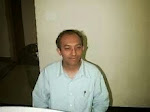
Kenneth E. Rich -- a picture posted by one of his friends
on Ken's Facebook page after his passing
  
The Harder Road  

 
There is a thing that’s known as trust.  So children, elders need
The ones they trust to do what’s right.  And friends and kin, who’re trusted,
Should know that trust is like respect—for when, in speech or deed,
These things are violated, they are then forever busted.
 
Yet teachers bow to orders and so let their students down.
And elders often aren’t treated with respect that’s due.
To tell the truth is difficult.  It’s easier to lie.
And yet the truth is better far, for all—and me and you.
 
A lie can never substitute, whatever our intent,
For truth.  By sticking to the truth, we take the harder way.
A fact might cause discomfort, but that’s better than deceit.
Humility requires the truth.  Let gods, to falsehoods, stray.
 
The hubris that promotes the lie, so life becomes deception,
Was practiced by the kings and priests.  The masses then were tamed.
So to this day, “God save the king!” is shouted out with fervor,
And those who so salute the brigand breed are not ashamed.

As those who questioned lies were punished, often being killed,
We humans came to tolerate the lies our masters spoke.
And in our turn, we turned to lies. We cheated and we stole.
So humans were corrupted by the lie as by the yoke.

But those who seek in mathematics and those who search in science,
Yet falsify, are looked upon with wonder and contempt.
For these are ways of seeking truth, of sorting true from false.
And in this search, no falsehood small can ever be exempt.

But in the cities we can see that falsehoods run our lives,
For people often can be fooled, and for the longest while.
Expedience and truth are rarely partners. So we see
The profiteers and politicians lie and quietly smile.

By going on the liars’ way, we are ourselves corrupted.
And so we find there’s less of trust and more and more suspicion.
The ones who lie and cheat and steal are seen to be ascendant,
And those who trust are seen as fools and treated with derision.
     
So marriages can fall apart, and families be torn.
So soldiers might be sent to war, to battle and to die,
By those that they have trusted, who have treated them with scorn.
And nations whole might be consumed, proceeding from a lie.

We might then hope that we would learn, from all our past mistakes—
That we would not begin a war, or violate a trust.
And yet we see that, all around, our hopes for this are dashed.
So people suffer needlessly, from punishments unjust.

The worker who is diligent, the teacher working hard,
The parent doing what is right, the soldier in the battle—
These are not the ones who’re praised, or even left alone.
The Bloombergs and the Trumps can herd, and all the rest are cattle.

   
Kenneth E. Rich -- another picture posted by a friend
on Ken's Facebook page after his death

 
So will we ever taste the truth that’s hard to take for those
Who swallow down the easy lies in sugar coated pills?
Its bitter taste might put us off, but truth has this as value—
It’s needed, if we do desire to rid ourselves of ills.

We might believe in Hindutva, the glory of Islam,
The sought-for Christian paradise or the ancient promised land,
Or not believe in anything, as skeptics often do.
There still remain the facts.  The truth is left to understand.

In mathematics and in science, it’s easier to find
What’s true and what is not.  In politics and history,
We’re sold what we are taught.  But if we bear this sale in mind,
We know that what we buy is dear.  The price is liberty.

So how can we discern the truth, and sift the facts from fictions?
We cannot visit what is past, we only know the present.
And what goes on in places far, the real reasons for a war,
Are rarely known to the soldier or the worker or the peasant…

And even those with education, lighted with degrees,
Are often in the dark themselves and even more befuddled.
And yet they often think they know, and speak as if they do.
And so the lies can propagate, as myths and facts are muddled.

We might attempt to read in books.  But books are not the truth.
We might attend to prophets. Yet the prophets might be false.
And so, in searching, we’re misled, mistaking branch for root.
The nightingale is silent, while the cuckoo loudly calls.
 
So in the end it’s instinct, and the opening of mind
And also of the heart—that comes from listening, in quiet.
And when we take the time to do this, slowly, we will find,
The truth is taking form, beneath the falsehoods running riot.

For others may bestir the mind, with prejudice and hate.
And they might to seek to cow us or to lead us on a dance.
But we ourselves can clear the mind, until it’s like a lake
Through which the bottom is revealed, dispelling then the trance.

To do this thing is difficult, for those who’re stressed and caught
Within the mills they’re wanted in, to endlessly “produce”.
But when we get the chance to try, we then should quietly listen.
We might regain our tie to truth, which offers no excuse.

But seeing then this truth, we can’t be serfs again to Mammon,
Or be as Pollyannas who refuse to see the evil.
So then we each can take our turns to choose the road we travel,
And take the harder one to God, or the easier to the Devil.

Let’s listen to that conscience that might speak in softer tones.
Let’s beware of easy answers and of laziness of mind.
Let’s seek what others knew or know, and let us range afar,
And yet remember still to speak the truth—and to be kind.
 
2015 October 25th, Sun., 4:47 pm (final eleven stanzas, after the break)
(first eleven stanzas, before the break, added Oct. 26th, Mon.)
Bensonhurst, Brooklyn, New York
   

Saturday, October 10, 2015

Dine O Rate—দিনে ও রাতে—Day and Night

 
The verses in the beautiful, traditional Bengali script
are followed by two transcriptions into Roman letters.
After these, there is a translation into English.
  
দিনে ও রাতে
  
বসিয়া বসিয়া ভাবি, কি করিব হায়!
বুকের মাঝে আতঙ্ক, চারি দিকে ভয়৷
দেখিতে দেখিতে আসিল সন্ধ্যা প্রায়৷
আকাশে, ক্রমশ দিনের আলোর ক্ষয়৷

ঝিমিয়া ঝিমিযা, শুইয়া পড়ি খাটে৷
ঘুমের স্রোতে, ভাসিয়া চলিয়া যাই৷
জানি না, কি পড়িলাম, সপ্নর পাঠে,
তরঙ্গ পার হইয়া, কোন ঘাটে পাইলাম ঠাই৷

দাঁড়াইয়া উঠি যখন, রাতের নিশিতে,
শিহরিয়া শুনি তখন শৃগালের ডাক৷
রাতের শীতল হাওয়া বহিছে বাহিরে৷
জানালা দিয়া দেখি, তারার ঝাঁক৷

কুটির হইতে, রাতের রাস্তা দিয়া চলি৷
দিগন্তে ডুবিতেছে চাঁদ, রক্তমাখা৷
গাছের পাতার, পায়ের আওয়াজ শুনি৷
আসি শেষে নদীর তীরে, কুয়াশায় ঢাকা৷

দাঁড়াইয়া শুনি নদীর গুপ্ত বহন৷
মনে হয় যেন জিবনের গতি৷
ফিরে চলি বাড়ির দিকে যখন,
ভিজা পাতায় দেখি দুরের তারার জ্যোতি৷

শনিবার, ১০ই অক্টোবর, ২০১৫ খ্রি
ব্রুক্লিন, নিউয়র্ক
--------------------------------------------------------

Dine O Rate  (transcription 1: follows pronunciation)
   
(For a summary of the transcription scheme used here, please see the the preface to the post at  Bharot Xadhin (India Free). )
 
Boxia boxia bhabi, ki koribo hae!
Buker majhe atonko, cari dike bho`e.
Dekhite dekhite, axilo xondha prae.
Akaxe, kromoxo diner alor kho`e.

Jhimia jhimia, xuia pori khat’e.
Ghumer srote, bhaxia colia jai.
Jani na ki por’ilam xo`pner pat’he,
to`ro`ngo par hoia, kon ghat`e pailam t’hai.

Dar’ia ut’hi jo`khon, rater nixite,
Xihoria to`khon xuni srigaler dak.
Rater xito`l haoa bohiche bahire.
Janala dia dekhi, tarar jha~k.

Kut’ir hoite, rater rasta dia coli.
Digo`nte d’ubiteche ca~d, ro`kto-makha.
Gacher patar, paer aoaj xuni.
Axi xexe nodir tire, ku~axae-d’haka.

Dar’aia xuni nodir gupto bo`hon.
Mone ho`e je`no jibo`ner goti.
Phire coli bar’ir dike jo`khon,
Bhija patae dekhi durer tarar joti.
 
Xonibar, 10-oi O`kt’obar, 2015 khri.
Bruklin, Niu Io`rk
--------------------------------------------------------

Dinē ō Rātē  (transcription 2: follows traditional spelling)

This is the "machine transcription" for Bengali that is available 
(along with "machine translations" that are not yet palatable) at 
https://translate.google.com/ .  I have edited that lightly to remove 
the "a" letters that are silent in current spoken Bengali. These are 
implicit in the traditional script but are made explicit in the machine 
transcription.  I have also added periods (full stops).

Basiẏā basiẏā bhābi, ki kariba hāẏ!
Bukēr mājhē ātaṅka, cāri dikē bhaẏ.
Dēkhitē dēkhitē āsila sandhyā prāẏ.
Ākāśē, kramaśa dinēra ālōra kṣaẏ.

Jhimiẏā jhimiyā, śuiẏā paṛi khāṭē.
Ghumēr srōtē, bhāsiẏā caliẏā yā'i.
Jāni nā, ki paṛilām, sapnar pāṭhē,
taraṅga pār ha'iẏā, kōn ghāṭē pā'ilām ṭhā'i

Dām̐ṛā'iẏā uṭhi yakhan, rātēr niśitē,
śihariẏā śuni takhan śr̥gālēr ḍāk.
Rātēr śītal hā'ōẏā bahichē bāhirē.
Jānālā diẏā dēkhi, tārār jhām̐k.

Kuṭir ha'itē, rātēr rāstā diẏā cali
Digantē ḍubitēchē cām̐d, raktamākhā
Gāchēr pātār, pāẏēra ā'ōẏāja śuni.
Āsi śēṣē nadīr tīrē, kuẏāśāẏ ḍhākā.

Dām̐ṛā'iẏā śuni nadīr gupta bahan.
Manē haẏ yēna jibanēr gati.
Phirē cali bāṛir dikē yakhan,
bhijā pātāẏ dēkhi durēr tārār jyōti.

Śanibār, 10i Akṭōbar, 2015 khri
Bruklin, Ni'uẏark
--------------------------------------------------------
 
Day and Night  (translation into English)

Dine O Rate (literally: in the day and in the night)


I sit and ponder. What to do?
There's fear within and all around.
The evening comes apace.
The sky is drained of light.

I doze and lie down on the bed.
I am carried away on the stream of sleep.
I do not know what I read in the book of dreams,
What shore I reach on crossing over the waves.

On rising up, in the dark of the night,
I shiver and hear the jackals' call.
The cold wind is blowing through the night.
I see, through the window, a swarm of stars.

I leave the house to walk the road of night.
I see the setting of the bloodstained moon.
I hear the sounds of footfalls and of leaves,
And come at last to the mist-draped river's shore.

I stand and hear the river's hidden flow.
It seems to be the rushing course of life.
On walking back towards my home, I see
The starlight on the dark and dew-clad leaves.

Saturday, 10th October, 2015 
Brooklyn, New York
  

Saturday, October 3, 2015

How Beautiful—III

 
How Beautiful—III
 
How beautiful this world is,
in which we chance to live—
the blues and greens of sky and plants,
the warmer hues of earth,
the flowers dancing in the breeze,
the wondrous forms of beasts,
the sounds of water and of air—
the tinkle, rustle, swoosh,
the drumming of the raindrops,
the roars of waves and storms,
the scents of rose and jasmine,
of fruits and musks and earth,
the light that’s always changing—
the wonder of the dawn,
the clouds that soar and tumble,
the brilliance of noon,
the starry skies of midnight,
the phases of the moon…

******

I have heard the children laughing,
I have watched the puppies play.
I have seen the mother smiling
at the infant she had borne.

I have seen the sad, the evil,
the horrors of this world.
and yet, when I’m despairing,
I see its wonder still.
 
And so, when I’m departing,
despite the pain I’ve borne,
I’ll leave this place in gratitude,
and bless the ones that live.

To those who have departed
and those who're still unborn,
I'll send my silent greetings,
before I leave this world.

2014 September 24th, Thu.
(last 4 stanzas added Oct 3rd, Sat., along
with lines 4 to 7 from end of 1st stanza)
Bensonhurst, Brooklyn, New York

Two earlier poems with the same title:

 *   How Beautiful—II  

Monday, September 14, 2015

Echoes

 
Echoes 
   
  
Chaos
     
When I get up in the morning,
And I totter from my bed,
I remember then my father,
Who’s been only three years dead.

And then looking in the mirror,
Since I’ve shaved away my beard,
I can see my father’s visage
And no longer think that’s weird.

The grunt I make on rising,
The downturn of my mouth,
Remind me that I’m aging,
For my parts are going south.

And I see and hear my father
And my uncles, grandpas, more—
That lineage, male, of elders
Who walked this way before.

So I go about my business,
But suddenly I laugh,
Remembering a gem-like grain
My father picked from chaff.
 
He had an eye and ear for it.
I hear, as I grow old,
His mild remarks that made one smile,
The stories that he told...

******
   
But when I see a stranger
And I see that stranger smile,
I know my mother’s in me
And will remain a while.

For that was how they greeted
My mother, who had eyes
That looked on them with kindness,
As each would then surmise.

And so it is with puppies
And even dogs when grown—
Except it’s me who’s smiling,
As if they were my own.

She had a way with animals,
As she also had with us.
Her instincts, of the kinder sort,
She acted on—sans fuss.

So though she was a mortal
And so had faults like all,
It seemed she was an angel,
Who’d chanced, by us, to fall.

And so my aunts and grandmas,
And that widow, with a will,
Who mothered so my sister,
Are each within me still.

******
 
I see my sister walking
Within a region hallowed.
She went her way before me.
I often wish I’d followed.

I call to her, “I’m coming.”
She doesn’t seem to hear.
I stand and watch my sister—
So distant, yet so near.

In everything she tried to do,
It seemed that she was gifted.
And yet, with so much left to do,
Her soul, from Earth, was lifted.

I read the pages of the book
She’d written with such grace.
And as I read, she lives again,
And I can read her face.

******
 
I also see the others—
From the villages and towns—
To whom I sat and listened—
The sages and the clowns…

My cousins, older, younger,
The friends I made at school,
And those who once were neighbors—
Are still within this fool.

For a fool is what I’ve turned to,
Upon my downward arc.
And so, to all that brightness,
I turn to, in the dark.

Our childhoods might be wretched,
But even those have light.
The hurts are healed and hidden,
The blessings stay in sight.

******
 
We circle, in our journeys
From birth to death, so when
We near our mortal endings,
We’re back where we began.

And where was my beginning,
Except where I was born?
So there I'll be returning
To mend the fabric torn.

I will see again the rivers
And the fields of gold and green,
So even in my misery
A breeze will blow, serene.


Village River, by Samiran Sarkar, 2011
http://www.absolutearts.com/art-for-sale/themes/all/landscape/river-5.html

 
I will hear the city’s bustle;
I will see the city’s skies.
I will squint up at the cloudscape;
I will watch the kite that flies.

I will hear the tongues my kinsfolk spoke.
I will hear the dialects’ speech.
I will savor, as I’m dying,
The flavor that’s in each.

The languages of childhood,
Of the land that gave me birth,
Their timbres and their cadences,
I’ll hear, when leaving Earth.

******

The aged are often treated
With disrespect and worse.
The scoldings are repeated,
With orders sharp and terse.

There are echoes from our childhoods
That we hear through all our lives.
And among these there are voices
That can help us bear the jibes.

There are voices past of wisdom,
There are voices that are sweet.
There are voices that are sterner
That can help us bear defeat.
   

Chaos and Perception

I’ve traveled, in my journeys,
Across the theaters grand.
I’ve met the proud and humble
And grasped the offered hand.

But when I’m near my ending
And racked by grief and pain,
The proud will be forgotten;
The humble might remain.

But surely those, that childhood
Had seen with a widened eye,
And those, to whom I bonded,
Will haunt me, as I die.

So when my hearing’s faded,
I will hear those echoes weak—
I will hear my parents talking,
I will hear my sister speak.

     
2015 September 12th, Sat., 10:20 pm
Skyway Restaurant, Bath Avenue
(some stanzas added Sept. 14th, Sun.)
Bensonhurst, Brooklyn, New York
  

Sunday, September 6, 2015

The Murmuration

 
The Murmuration

I saw the starlings in the sky.
They wheeled and arced and seemed to weave
a giant form of sentience.

I stood transfixed and watched with awe
the flowing shapes that being took
that twisted, turned, dispersed, condensed…

And as I watched, I heard the sound,
the murmur of the beating wings—
a hundred thousand pairs of wings.

I heard it rise from a whisper, surge
and fade and rise and ebb again—
like waves within an aerial sea.

And all at once the cloud grew dark
and swiftly plunged across the trees,
as one by one they settled down...


A giant bird is created out of a starling murmuration in Scotland.
http://www.grindtv.com/random/starling-murmurations-create-fantastic-show-in-scottish-sky/
   
I wondered whether starlings had
their schools, in which they taught their young,
and whether tuition there was free.

And did the students there have tests
and were the teachers graded too?
Did Danielson hit starlings too?

I shook my head.  I’d seen and heard
the murmuration on a screen,
as schools were just about to start.

I thank you, Diane Ravitch and
the one who sent this, Susan Schwartz,
and Dylan Winter for the clip.

But most of all, I thank the birds,
who fly across the heavens, free,
as  humans were—and still could be.

2015 September 6th, Sun, 12:26 pm
Bensonhurst, Brooklyn, New York  
   

Thursday, September 3, 2015

Sin


Sin

Lead us not into temptation
And deliver us from evil.
Amen.

We blame a class, a race or other group—
There are professions that are often blamed.
But it’s the nature of the human beast
That’s still the culprit for the mischief done.

For every virtue, every angel-trait,
We’ll find a vice, a sort of devil’s taint,
That mars the soul within a human or
Perhaps within all beings sentient.
 
If we had only virtues, then perhaps
We might be far too boring.  Light and shade
And vice and virtue, good and evil are,
Like yin and yang, in constant interplay.

So some might say that vice gives virtue place,
As hunger gives to plainest food its taste.
Without the sins that sinners multiply,
Could even saints be duly recognized?
 
And what, to me, is virtue could be seen
As vice to one whose values are reversed.
And yet, there still are basics that appear
To be the common ground on which we stand.

So save for prophetesses such as Ayn,
You’ll rarely find that people disagree
That selfish actions lead to evil ends,
While love and caring make for brighter lives.

For this, we might invoke a spirit that
Is root and essence of what’s seen as good,
And all that’s evil might be then ascribed
To visions clouded—or to a spirit dread.

But others might look back at what we were
When we were closer in our lives to apes
But rose and flourished from that sharing which
We still perceive as good—which touches hearts.

So "good", to them, is that which served us well
In eons past, when mind and body formed
To suit the circumstances then—for though
The times have changed, we still remain the same.

I will not enter into these debates.
I’ll only say that instincts old and deep
Respond to kindness—and that meanness brings
Yet other, meaner instincts into play.

To strive to be as supermen is fraught
With danger. We are always what we are.
We should be cognizant of what’s within
And seek a balance that sustains us all.

For when that balance is disturbed, we see
The sorrow that is not of earth or air
Or water, but is made by acts of men
And leads to yet more sorrows, turn on turn.

The earthquakes and the storms and floods may leave,
But fires rage and droughts and famines come.
Yet all of these, by men and all, are borne
With lesser pain than monstrous deeds of Man.

A fire may burn a forest down and yet
It leaves a part of it—and then with time
That forest lives again. What Man has touched
With devil's hands, no heaven can restore.

Be watchful then. Remove yourself from that
Which leads to conflicts with your inner god,
Who then is either silenced, leaving sin
To flourish, or cries out in pain within.

The ones, who cannot silence conscience, live
With ceaseless war within themselves, unless
They speak and act to change what often is
Impossible when others shrug and sin.
 
It wasn’t Adam or his partner, Eve,
Or a serpent leading both of them astray.
It’s we, who look to God to salve our sins,
Forgetting god and devil are within.

We lose our way and cannot find the path.
We lose our reason and we close our hearts.
It later seems that we were not awake
And so committed acts we shouldn't have.

The heart expands with kindness and with love,
Which spread like blessings when they’re acted on.
The heart contracts with meanness and with hate
And all our words and deeds of violence.

It’s difficult, within the fire, to be
As cool of temper as we’d like to be.
It’s hard, when we are stressed and desperate,
To be as kind and patient as we should.

So what are we to do?  Perhaps it’s best
To move away from all that meanness breeds—
To distance selves from where it’s fear and greed
That drive the engines of economies.

Although that’s easier said than done, to see
The source of evil, of disturbance, is
To step away from it, towards that calm
That gives us time and space to see and love.

We come like water and like wind we go.
So said Khayyam, Fitzgerald’s paraphrase
Purports.  If we should pray, perhaps we need
To ask for courage and for innocence.

So let us then release the things, to which
We hold, that rob us of our clarity.
That freedom might be difficult to reach,
Until we see we’re sullied by our vice.

There’s anger, greed and hate and jealousy.
And each of these, and even pride, has place
Within the workings of the mind that lives,
But each of these can lead us into sin.

For sin is not the thought that comes and goes
Or even stays awhile.  For thoughts may rise
And feelings too.  It’s when they’re nurtured and
They’re acted on that sin is birthed and born.

So let us heed what Buddhas past have said
To free ourselves of what some others call
The burden that we carry of our sins.
Let’s set it down and go upon our way.

We recognize a thought, a feeling and
We see, perhaps, its provenance as well.
We watch its rise and then we watch its ebb.
We do not ask that it should go or dwell.

We do not fear the feeling that we have,
And even fear, we know, has time and place.
We come like water, and we go like wind.
Forgive us, for we know that we have sinned.

And knowing this, we then might lose, perhaps,
Our hubris and might also find the strength
To heal from wounds that others might inflict,
Forgiving them, in our humility.

Lead us not into temptation
And deliver us from evil.
Amen.

2015 September 3rd, Thu., 2:30 am
Bensonhurst, Brooklyn, New York
  

Tuesday, September 1, 2015

Morning’s Song


Morning’s Song  (Draft)

Note: To view the pictures as in a gallery, in a somewhat bigger and clearer format, please single-click on any image.  This should lead to a gallery-view screen, in which you can click on the thumbnails at the bottom to move through the images.  To return to this post, click on the white X in the black background to the gallery.  Thanks. -- Arjun
------------------------------------------------

  
Dawn touches Bratley View, in the New Forest, England
by Martin Dixon, 2012
http://www.photoforbeginners.com/image/20280/dawn_touches_bratley_view  

The days and nights are contrasts, like a zebra's coat of stripes,
Yet dawn and dusk have softness; they dance in pastel shades.
Their songs are more like whispers that rise and fade away,
For these are our transitions, the pauses in the plays.

The hues of dawn grow lighter, the ones of dusk grow deep.
The mists of dawn are nestled, the clouds of sunset flame.
The psalms of sunrise waken, the hymns of dusk sedate.
The morn is children’s laughter, the evening is our sighs.

******

I have woken and have listened to the singing of the dawn.
I have heard the song of morning; I have heard the chants that rose.
I have heard the waking whispers, I have listened to the tones.
I have heard the bells of morning as they pealed the start of day.

I’ve had mornings that were peaceful, that were tranquil, lit by grace,
I’ve had mornings that were hopeful, when it seemed that all was well.
I have walked then in the open, when the stars were still in sight.
I have seen the eastern dawning, as the night was fleeing west.


Morning Glory
Smoky Mountains, Haywood County, North Carolina
http://favim.com/image/49184/

I have felt the mists of morning; I have seen them touched by sun.
I have watched those mists arising as the dawn became the day.
I have heard the birds of morning as they tweeted, chirped and sang.
I have seen the fields and flowers as they woke to greet the sun.

I’ve been blessed by early morning, when I rose before the dawn.
I have breathed the scents of morning; I have shivered from its chill.
I have touched the wet on leaflets; I have tasted of the dew.
I have seen the waving treetops, as the morning came in view.


Daffodils, Skagit Valley, Washington  

But we’ve been robbed of morning and we’ve been robbed of dusk.
At dawn, you’ll see us rushing to get to work in time.
At evening, we’re returning, with worries still in mind.
We’ve rarely time for smiling—or even for a sigh.

And some must work the night-shifts and never see the sun.
The stars are now forgotten, the moonlight does not fall
On little children sleeping.  The nightingale and lark
Are only met in readings.  What still is left of soul?

******

How many years, how many years, have passed without the dawn?
How many years of misery, without that bit of grace?
How many hopes and dreams arose, as did that rising sun;
How few are those that still are left, as daylight cedes to dark…

I’ll rise again, before I leave, to see that precious morn—
That morning time that brings us hope and gives us strength again.
I’ll wake again, before the dawn, and venture out of doors,
To be once more, before I go, at one with morning’s song.


Kangchendzongha, from Kolakham
by Anirban Ganguly
looking northeast through Sikkim, from near the Bhutan border
Neora Valley National Park, West Bengal, India

2015 September 1st, Tue., 4:55 am
Bensonhurst, Brooklyn, New York
-----------------------------------------------------
  
Recent related poems: 
  
  
and two from eleven years ago: